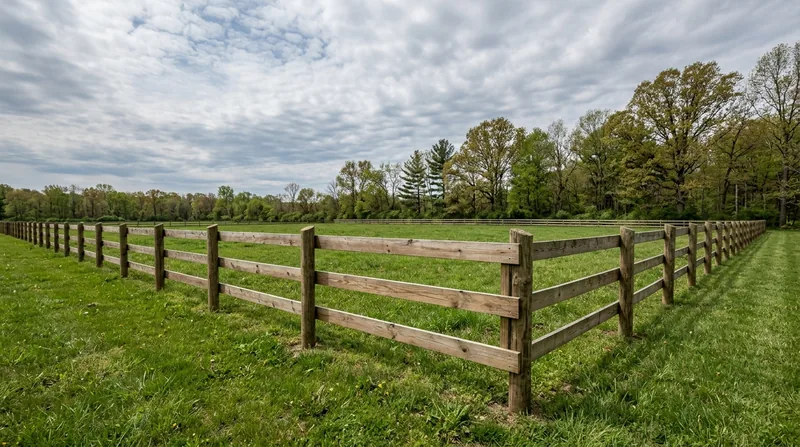




Farm fence installation in Cleveland and the surrounding exurban counties demands posts set deep below the frost line and materials that hold livestock through winter. Whether you manage acreage in Geauga, Medina, or the rolling pastures near Solon and Chagrin Falls, a well-built ranch or farm fence is the foundation of property control and animal security. Cleveland Fence Company has installed and repaired farm and ranch fencing since 2015, working with property owners who need woven wire, high-tensile cable, board rail, split rail, and pipe fencing that performs in open ground and exposed terrain. We work from your property line, set posts in concrete below frost depth, and build fences that stay plumb and tight through the seasonal cycle.
Why Farm and Ranch Fencing Matters in Greater Cleveland
Farm and ranch properties in the Cleveland region, especially those extending into Geauga and Medina counties, sit on open ground where wind, drainage, and frost cycles put stress on fence posts and materials. Livestock containment is not optional, and neither is durability. A fence that fails mid-season leaves animals at risk, compromises property boundaries, and forces expensive emergency repairs.
- Posts must be set below the frost line to prevent heave and shifting as ground freezes and thaws.
- High-tensile wire and board rail systems hold livestock in place without sagging or bowing under animal pressure over months.
- Open pasture fencing requires wider post spacing and stronger bracing than residential privacy fence, because wind load and animal impact are constant forces.
- Galvanized and powder-coated hardware resist rust and corrosion when exposed to weather and moisture for years.
- A properly installed farm fence reduces liability and prevents property disputes with neighbors.
Property owners who invest in quality farm fencing avoid repeated repairs and the cost of replacing animals that escape or become injured.
Key info: Ohio law requires an 811 utility locate before any digging of post holes. Call 811 or visit ohio811.org at least three business days before work begins. This protects underground gas, electric, water, and telecommunications lines on your property.
How We Build Farm and Ranch Fencing in Cleveland
Farm fencing installation begins with a site walk to assess terrain, post locations, livestock type, and budget. We establish the fence line from your existing survey or your marked boundary, then plan post spacing, material type, and bracing to handle the load. Our crew marks utility locations, digs post holes below frost depth, sets posts in concrete, and runs rail, wire, or board across the line with proper tension and support.
- We verify your property line and confirm any HOA or local setback rules that apply to your parcel.
- We arrange an 811 utility locate and mark all underground utilities before digging.
- We dig post holes to depth below the frost line and set posts in concrete for stability and longevity.
- We run wire, board, or cable with proper tension and anti-sag bracing to prevent sagging and maintain fence line integrity.
- We install gates with self-closing and self-latching hardware so livestock cannot escape through operator error.
- We inspect the completed fence for plumb, tension, and secure attachment before we leave the site.
This methodical approach ensures your fence holds livestock reliably and resists seasonal stress.
Local example: A 40-acre horse property near Medina requires split rail or no-climb fencing with posts set 8 feet apart and braced at corners. Posts go down 4 to 5 feet into the ground to sit below frost depth. Board-on-board or woven wire runs the perimeter, with gates at entry points and water tank access. Our crew handles the entire job in 2 to 4 weeks depending on terrain and material availability.
If an existing fence is sound but needs repair, we assess whether fence repair is the better choice before recommending replacement. Sagging wire, loose posts, and broken boards can often be fixed for a fraction of the cost of a new fence.
Farm and Ranch Fencing Methods and Materials
| Approach | Description | Best for |
|---|---|---|
| Woven Wire | Horizontal and vertical wires interlocked in a grid pattern, galvanized or powder-coated, stretched tight between posts with tension bands and stretcher bars. | Cattle, horses, sheep, and goats on open pasture or ranch ground; prevents jumping and crawling. |
| High-Tensile Cable | Single or multi-strand galvanized steel wire stretched under high tension between posts, held by insulators and tensioning hardware. | Large pastures and open range; minimal visual impact; holds livestock securely with less material weight. |
| Board Rail | Pressure-treated pine or cedar boards run horizontally between posts, typically 2 or 3 rails high, with posts spaced 8 to 12 feet apart. | Horses and small livestock; attractive appearance; requires periodic maintenance and board replacement. |
| Split Rail | Rustic wooden rails split from cedar or locust logs, laid in mortise holes in wooden posts, creating a classic ranch appearance. | Decorative and functional fencing on estates, hobby farms, and rural properties; lower security for aggressive livestock. |
| Pipe Fencing | Steel pipe posts and rails, galvanized or powder-coated, welded or bolted together for maximum strength and minimal maintenance. | Heavy livestock, high-impact areas, corrals, and loading zones; long-term durability and professional appearance. |
| No-Climb Mesh | Vinyl-coated or galvanized wire mesh with small openings, attached to posts with brackets and fasteners, prevents animals from climbing or inserting heads. | Horses and goats; safe containment without horizontal rails that animals can use for climbing. |
Each material and method carries different costs, maintenance demands, and longevity. We help you choose based on livestock type, terrain, budget, and how long you plan to keep the fence in place.
Farm and Ranch Fencing Cost in Cleveland: What to Expect
Farm and ranch fencing costs vary widely based on material, post spacing, terrain, and the number of gates. Starting at $12 per linear foot, a basic woven wire fence with posts set in concrete and proper bracing can be installed on level ground with good access. Rough terrain, rocky soil, wide post spacing, high-tensile cable systems, or pipe fencing move the price higher. A property with multiple gates, water tank access points, or steep slopes will cost more per foot than a simple rectangular pasture.
Factors that affect the final cost include material choice (woven wire versus high-tensile versus board rail), post depth and concrete setting, terrain and soil conditions, number and type of gates, and distance from our service area. We always recommend getting 2 or 3 estimates so you can compare approach, timeline, and price. Visit our pricing page for a detailed breakdown of material and labor costs by fence type.
A 10-acre property with a perimeter of roughly 2,100 linear feet, woven wire fencing, and two gates might run $25,000 to $35,000 depending on site conditions. A smaller 2-acre parcel with board rail and one gate could range from $4,000 to $8,000. The best way to get an accurate number is to call for a free estimate and have our crew walk the property.
Farm and Ranch Fencing Near Me: What Cleveland Homeowners Should Know Before Hiring
Hiring a farm or ranch fencing contractor requires the same care as any skilled trade. Look for a company that is fully insured with general liability and workers' compensation coverage, offers a certificate of insurance on request, and has verifiable references from local property owners. Ohio issues no state license for fence installation, so contractor registration and licensing are set by individual municipalities and vary across Greater Cleveland. Always ask a contractor how they handle permits, setbacks, and HOA rules in your specific city or township, because requirements differ.
Get multiple estimates so you understand the range of pricing and approach. Ask each contractor how they handle utility locates (required by law before digging), what warranty or guarantee they offer on posts and materials, and whether they repair or replace existing fence if damage occurs during installation. Check references with past customers in your area. If your property sits in a master-planned community or has deed restrictions, confirm that the fencing material and height meet those rules before work begins.
We are an AFA Member Installer (American Fence Association) and have been in business since 2015. We carry full insurance, provide a free estimate within 24 hours, and stand behind our work. If you have questions about farm fencing in Cleveland or the surrounding counties, call (216) 483-2628 or contact us online for a no-obligation site visit.
Farm & Ranch Fencing in Cleveland: Pricing Guide
| Service | Price | Details |
|---|---|---|
| Woven Wire Fencing | Starting at $12/ft | Posts set in concrete, wire stretched with tension bands; cost rises with terrain difficulty and post spacing. |
| High-Tensile Cable Fencing | Starting at $14/ft | Galvanized steel cable, insulators, and tensioning hardware; minimal visual impact on large open pastures. |
| Board Rail Fencing | Starting at $18/ft | Pressure-treated pine or cedar boards, 2 to 3 rails high; horses and small livestock; requires periodic board replacement. |
| Pipe Fencing | Starting at $20/ft | Galvanized steel pipe posts and rails, welded or bolted; high durability for corrals, loading zones, and heavy livestock. |
| No-Climb Mesh Fencing | Starting at $16/ft | Vinyl-coated or galvanized mesh with small openings, safe for horses and goats; prevents climbing and head insertion. |
| Gates and Hardware | From $400 to $1,500 each | Self-closing self-latching hardware, hinges, latches, and posts; cost depends on gate width, material, and operator type. |
Indicative pricing, the exact cost depends on square footage, finish, and site access. Free personalized estimate within 24h at (216) 483-2628.


