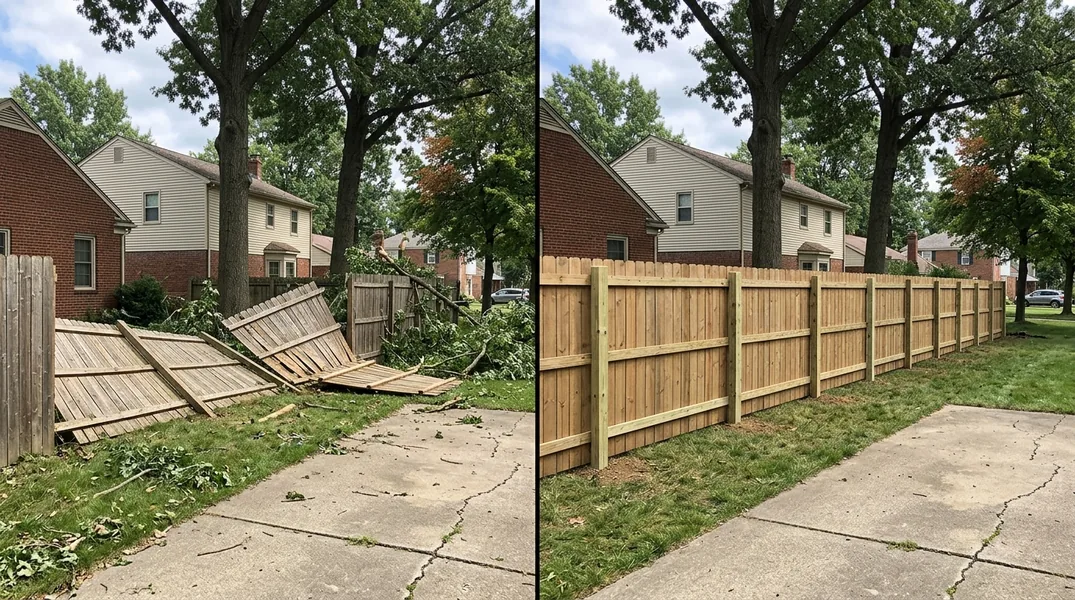
When Your Fence Blows Down: Understanding Storm Damage
Severe weather in Cleveland can strike without warning, and one of the first casualties is often your fence. Whether it's a powerful windstorm, heavy snow load, or straight-line winds, a fence that blew down leaves your property vulnerable, exposes your neighbors to liability concerns, and creates an eyesore that affects your home's curb appeal. Understanding what happens immediately after storm damage is critical to protecting both your property and your finances.
Storm damage fence repair isn't always straightforward. The extent of damage varies widely depending on the type of fence you have, how well it was installed, and the intensity of the weather event. A Wood & Privacy Fence Installation may suffer from snapped posts, cracked boards, or complete sections torn down, while Vinyl & PVC Fence Installation might show bent panels or uprooted sections. Chain Link Fence Installation can be twisted or torn from its posts. The first step is a thorough assessment of what happened and what needs to be repaired or replaced.
Does Homeowners Insurance Cover Fence Damage from Storms?
This is the question on every homeowner's mind after a major weather event. The answer is: it depends on your specific policy and the cause of the damage. Most standard homeowners insurance policies do provide some coverage for fence damage caused by covered perils like wind, hail, or falling trees. However, the details matter enormously, and many policies have exclusions, deductibles, and limits that can significantly affect what you actually receive.
Your homeowners insurance is more likely to cover fence damage if the damage resulted from a sudden, violent event like a severe windstorm or a tree falling on your fence during a storm. However, if your fence gradually deteriorated over time, or if damage resulted from poor maintenance, most insurers will deny the claim. Similarly, if your fence was damaged by wind alone without any other contributing factor, some policies may classify this as normal wear and tear rather than a covered loss. The best approach is to contact your insurance agent immediately after the damage occurs and provide detailed documentation, including photos and a description of the weather event.
Keep in mind that even if your policy covers fence damage, you'll likely face a deductible (often $500 to $1,000 or more), and your reimbursement may be limited to the depreciated value of the fence rather than the full cost of replacement. This is why understanding your policy before disaster strikes is so important.
Immediate Steps to Take After Storm Damage
The moments immediately following storm damage are critical. Your first priority should be safety and preventing further damage. If large sections of fence are down, check for any sharp edges, broken boards, or twisted metal that could injure someone. If a fallen tree or large debris is involved, ensure it's stable and not a hazard before approaching. Take multiple photographs and videos of all damage from different angles, as this documentation will be essential for your insurance claim and for getting accurate repair estimates.
Next, contact your homeowners insurance company as soon as possible. Most policies require prompt notification of damage, and delays can complicate or even invalidate your claim. Have your policy number ready, and provide the insurer with the date and time of the storm, a description of the damage, and the photos you've taken. Your insurance company may send an adjuster to assess the damage, or they may request that you obtain repair estimates from local contractors.
While waiting for insurance approval, consider whether temporary repairs are necessary. If your fence damage creates a safety hazard or allows unsecured access to your property, you may need to take immediate action to secure the area. This could include removing broken boards, stabilizing leaning sections, or clearing debris. Document any temporary repairs you make, as these expenses may be reimbursable under your policy. Don't make permanent repairs until you've discussed your claim with your insurance company, as this could affect your reimbursement.
Insurance Claim Timeline: What to Expect
Understanding the insurance claim process helps you manage expectations and plan your fence repair timeline. After you file your claim, the insurance company typically has 10 to 30 days to acknowledge receipt and assign an adjuster, though this timeframe can vary based on the volume of claims following a major weather event. During periods of widespread storm damage across Cleveland Heights and surrounding areas, processing times can extend significantly.
Once an adjuster is assigned, they'll schedule an inspection of your property. This inspection usually occurs within 7 to 14 days, though again, this depends on claim volume. The adjuster will assess the damage, verify that it's covered under your policy, and determine the amount of compensation you're eligible to receive. After the inspection, the insurance company typically has 15 to 30 days to issue a decision on your claim. If approved, payment usually follows within a few weeks.
The entire process from filing to receiving payment often takes 30 to 60 days under normal circumstances, but can stretch to 90 days or longer if there's significant storm damage in the region or if disputes arise about coverage. This is why it's important to have realistic expectations and to start contacting local fence repair contractors early. Many homeowners in Lakewood and Cleveland find it helpful to get repair estimates while the insurance claim is being processed, so they can move forward quickly once approval is received.
Getting Repair Estimates and Planning Your Restoration
While your insurance claim is being processed, gather repair estimates from qualified local fence contractors. Getting multiple estimates not only helps you understand the true cost of repairs but also provides documentation that supports your insurance claim. When you contact contractors, describe the damage clearly and ask for detailed written estimates that break down labor, materials, and any additional costs. This information will be valuable when negotiating with your insurance adjuster if they offer less than your estimates.
When choosing a contractor for storm damage fence repair, look for companies with experience handling insurance claims. Cleveland Fence Company has extensive experience working with homeowners and their insurers to restore fences damaged by storms. We understand the documentation and timelines required, and we can help ensure your claim is properly supported. When you're ready to move forward, contact us at (216) 483-2628 or request a free estimate to discuss your specific situation.
Consider whether this is an opportunity to upgrade your fence. If your existing fence was older or had recurring problems, you might choose to replace damaged sections with new materials that offer better durability or lower maintenance requirements. While insurance typically reimburses the depreciated value of repairs, any additional investment in upgrades would be your responsibility. Discuss your options with your contractor to understand the pricing for repairs versus replacement with different materials.
Preventing Future Storm Damage: Maintenance and Installation Best Practices
Once your fence has been repaired or replaced, taking steps to minimize future storm damage makes sense. Regular maintenance is one of the most important factors in fence longevity. Inspect your fence quarterly, especially before severe weather seasons, and address any issues promptly. Look for loose boards, rotting wood, rusted metal, or unstable posts. Remove debris that accumulates against your fence, as this can trap moisture and accelerate deterioration. Trim tree branches that hang over your fence to reduce the weight and wind resistance.
When it comes to installation, proper construction is essential for storm resistance. Fence posts should be set at appropriate depths (typically 2 to 3 feet for residential fences) in concrete footings that won't shift during heavy winds. Boards should be securely fastened with appropriate hardware, and spacing should be designed to allow wind to pass through rather than creating a sail-like effect. If you're considering a new installation or replacement after storm damage, discuss storm-resistant design options with your contractor. Different fence types offer different advantages: Aluminum & Ornamental Iron Fencing offers excellent durability and wind resistance, while modern vinyl options provide strength without the maintenance concerns of wood.
When you're ready to restore your fence after storm damage or to upgrade to a more durable option, Cleveland Fence Company is here to help. Call us at (216) 483-2628 today to discuss your needs and get started on your restoration project.
Looking for a professional tree service in Cleveland? Cleveland Fence Company responds fast for all your fence needs.
Get a Free Quote